Challah French Toast Casserole (Make-Ahead)
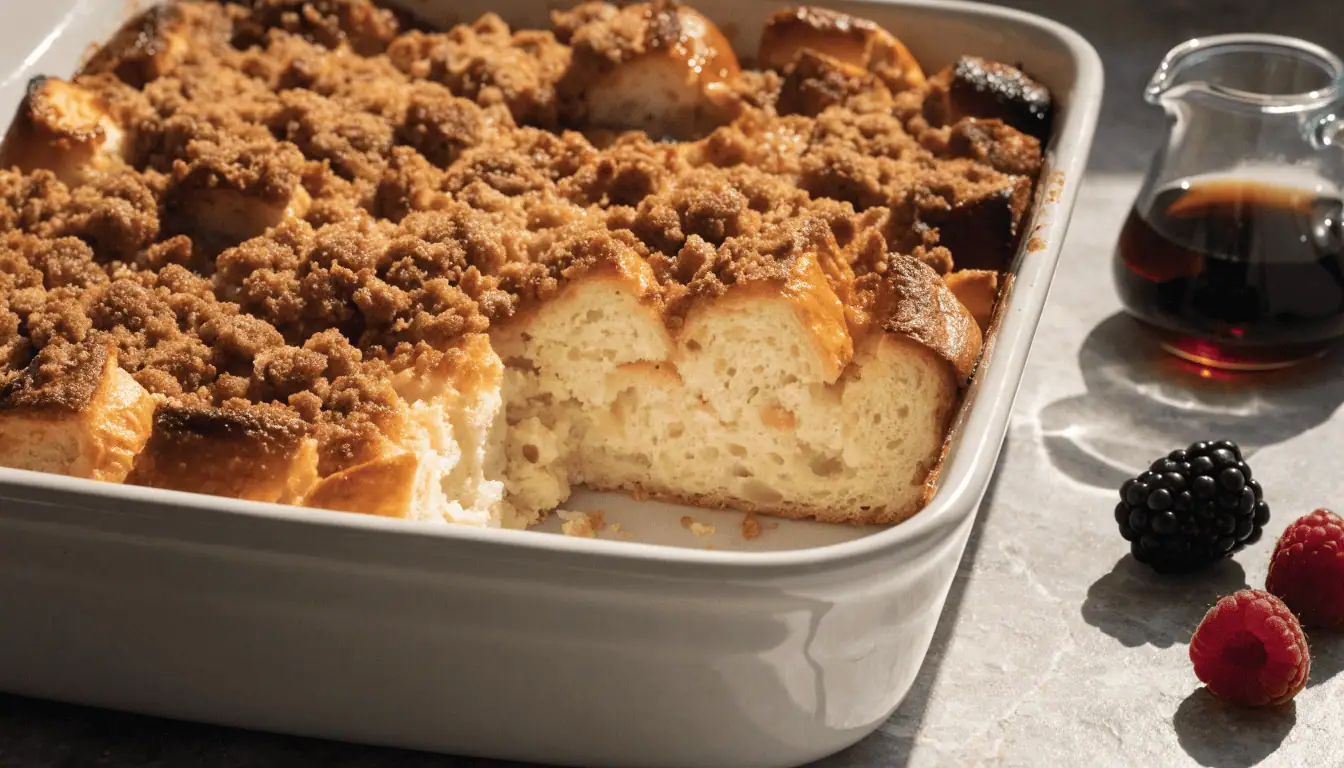
Challah French toast casserole is one of my favorite make-ahead breakfasts when I need something special without spending the morning at the stove. Thick cubes of soft challah soak in a cinnamon-maple custard, then bake beneath a buttery golden crumble until the center is fluffy and custardy and the edges are lightly crisp.
I especially like this casserole when breakfast needs to feed several people at once. Instead of standing over a skillet flipping slices of French toast, everything goes into one baking dish. You can assemble it the night before, refrigerate it, and bake it the next morning.
The challah is what makes the texture so good. It stays soft and custardy in the middle without disappearing into the egg mixture, while the exposed pieces turn beautifully crisp around the edges.
If your family enjoys hearty baked breakfasts, you may also like my Breakfast Casserole with Tater Tots, which takes the savory route instead.
Why This Challah French Toast Casserole Works
Challah is an enriched bread, usually made with eggs, which gives it a soft but structured crumb. That structure is exactly what we want in a baked French toast casserole.
Regular sandwich bread can become too soft after sitting in custard overnight. Challah absorbs the milk-and-egg mixture while still keeping distinct pieces of bread throughout the casserole.
Day-old challah is even better. Slightly dry bread absorbs custard more evenly, so you get a creamy center without a wet or mushy bottom.
The result is somewhere between classic French toast and bread pudding, but not quite as sweet as dessert.
Ingredients
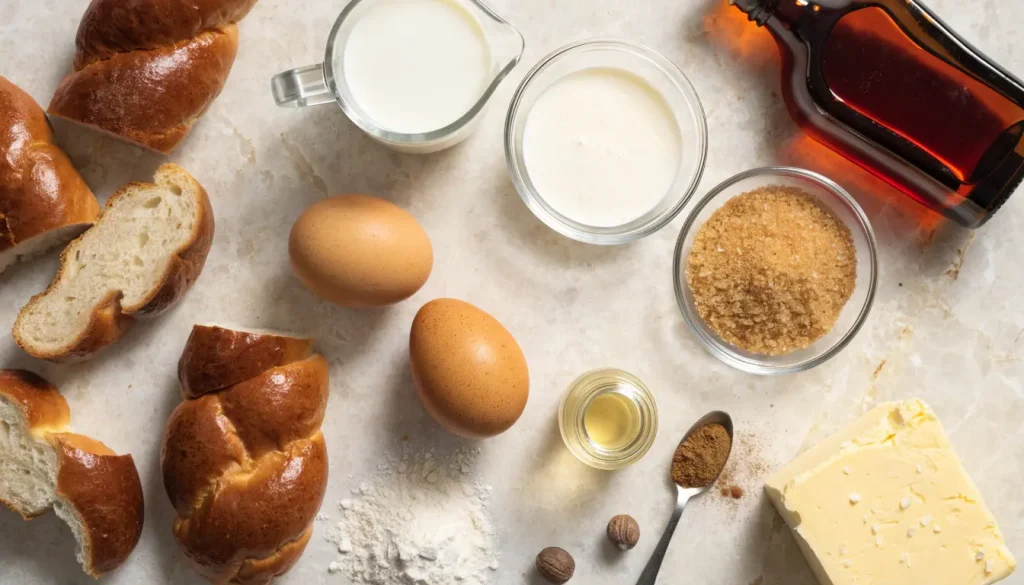
You’ll need:
- 1 large loaf challah bread, about 14–16 ounces
- 8 large eggs
- 2 cups whole milk
- ½ cup heavy cream
- ⅓ cup packed light brown sugar
- 2 tablespoons pure maple syrup
- 2 teaspoons alcohol-free vanilla flavoring or vanilla powder
- 1½ teaspoons ground cinnamon
- ¼ teaspoon ground nutmeg
- ½ teaspoon salt
For the Cinnamon Crumble
- ½ cup all-purpose flour
- ⅓ cup packed light brown sugar
- 1 teaspoon ground cinnamon
- Pinch of salt
- 5 tablespoons cold unsalted butter, cubed
You can serve the finished casserole with maple syrup, berries, powdered sugar, or sliced bananas.
A Note About Vanilla
Traditional vanilla extract can contain alcohol. For an alcohol-free version, use alcohol-free vanilla flavoring, vanilla powder, or another halal-suitable vanilla product.
The flavor is still warm and aromatic, and you won’t notice anything missing from the finished casserole.
How to Make Challah French Toast Casserole

1. Cut the Challah
Cut the challah into roughly 1-inch cubes.
Try not to make them too small. Larger pieces give the casserole a much better texture because some parts stay custardy while other pieces become crisp and golden.
If your challah is very fresh, spread the cubes on a baking sheet and let them sit uncovered for an hour or two. You can also dry them briefly in a low oven.
2. Fill the Baking Dish
Lightly butter or grease a 9×13-inch baking dish.
Add the challah cubes and spread them into an even layer. Don’t press them down tightly. A little space between the pieces helps the custard move throughout the casserole.
3. Make the Custard
In a large bowl, whisk the eggs until the yolks and whites are completely blended.
Add the whole milk, heavy cream, brown sugar, maple syrup, alcohol-free vanilla, cinnamon, nutmeg, and salt.
Whisk again until smooth.
Pour the custard slowly over the challah, moving around the baking dish so all areas receive some of the mixture.
Use the back of a spoon or clean spatula to gently press the bread into the custard.
Don’t mash it. You just want the top pieces to make contact with the liquid.
4. Let the Bread Soak
You now have two options.
For a same-day casserole, let the assembled challah soak for about 30 minutes before baking.
For an overnight challah French toast casserole, cover the dish tightly and refrigerate it for 8 to 12 hours.
The overnight version develops a particularly creamy center because the challah has plenty of time to absorb the custard.
Make the Cinnamon Crumble
In a small bowl, mix the flour, brown sugar, cinnamon, and salt.
Add the cold cubed butter.
Use your fingertips, a fork, or a pastry cutter to work the butter into the dry ingredients until you have coarse crumbs.
Keep the crumble cold until you’re ready to bake.
This topping is intentionally simple. It creates crisp little pockets across the surface without burying the casserole beneath a heavy layer of sugar.
How to Bake Challah French Toast Casserole
Preheat the oven to 350°F (175°C).
If the casserole has been refrigerated overnight, take it from the refrigerator while the oven preheats.
Sprinkle the cinnamon crumble evenly over the challah.
Cover loosely with foil and bake for about 25 minutes.
Remove the foil and continue baking for another 20 to 25 minutes, or until the top is golden brown and the center is set.
An overnight casserole may need a few extra minutes because it starts colder.
For egg-based casseroles, the USDA recommends cooking to an internal temperature of 160°F. Ask FSIS
The center should feel moist and tender, but you shouldn’t see liquid egg custard when you gently separate two pieces of bread.
How to Get a Custardy Center Without a Soggy Bottom
This is where French toast casseroles can go wrong.
The goal isn’t dry bread, but it isn’t bread floating in custard either.
There are three things that make the biggest difference.
First, use slightly stale challah whenever possible. Fresh bread already contains plenty of moisture and can struggle to absorb more liquid.
Second, use a baking dish that’s close to 9×13 inches. A much smaller dish creates a very deep casserole and makes the center slower to set.
Finally, don’t judge doneness by the top alone. The crumble can look beautifully browned while the center still needs another ten minutes.
If the surface gets dark before the middle is ready, simply place the foil back over the dish.
Same-Day vs. Overnight French Toast Casserole
Both methods work, but they produce slightly different results.
The same-day version has more defined chunks of challah and slightly crisper edges.
The overnight version is softer and more custard-like throughout the center.
For Christmas morning, Easter brunch, weekend guests, or any morning when you don’t want much prep, I prefer the overnight method.
Everything messy is already finished. In the morning, all you have to do is add the crumble and put the casserole in the oven.
That same make-ahead convenience is one reason casseroles work so well for busy families. You can find more ideas in my Easy Casserole Dinners collection.
What to Serve With Challah French Toast Casserole
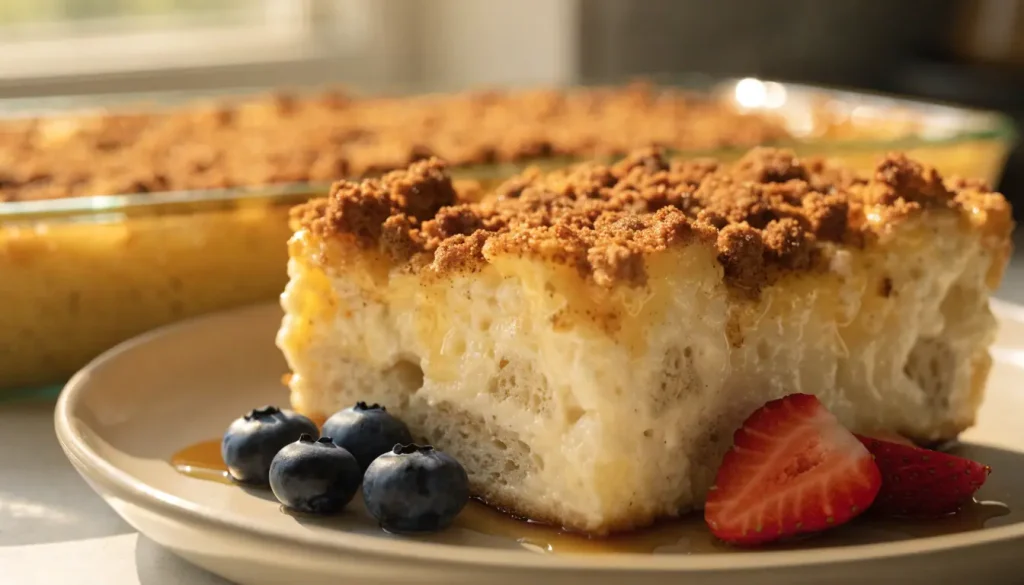
The casserole is rich enough that simple toppings work best.
Fresh strawberries, blueberries, or raspberries add some brightness. Sliced bananas are also especially good with the cinnamon and maple flavors.
For something more indulgent, add warm maple syrup and a very light dusting of powdered sugar.
If you’re serving a larger brunch, balance the sweetness with scrambled eggs, fresh fruit, roasted breakfast potatoes, or a simple fruit salad.
I usually place the toppings on the table rather than covering the entire casserole. That keeps the golden crumble crisp and lets everyone finish their own serving.
Variations
Berry Challah French Toast Casserole
Scatter about 1½ cups of blueberries or chopped strawberries between the bread cubes before adding the custard.
If using frozen berries, add them frozen rather than thawed so they don’t release too much liquid beforehand.
Apple Cinnamon
Add one peeled and finely diced apple to the bread, along with an additional ½ teaspoon cinnamon.
A firm apple such as Honeycrisp or Granny Smith works particularly well because it holds its shape during baking.
Pecan Crumble
Mix ½ cup chopped pecans into the crumble topping.
The nuts toast while the casserole bakes and add a nice contrast to the soft challah.
Less-Sweet Version
Reduce the brown sugar in the custard to ¼ cup and leave out the maple syrup.
You can always add a small amount of maple syrup at the table.
Common Mistakes to Avoid
Using bread that is too fresh: Very fresh challah can turn overly soft after an overnight soak.
Cutting the bread too small: Small cubes absorb custard quickly and can lose their structure.
Adding too much custard: More liquid doesn’t automatically make the casserole creamier. It can simply leave you with an undercooked bottom.
Skipping the resting time: Even the same-day version benefits from 30 minutes of soaking.
Overbaking it: Once the custard is set, continuing to bake will gradually turn the center from creamy to dry.
How to Store Challah French Toast Casserole
Let leftover challah French toast casserole cool before transferring it to an airtight container, or tightly cover the baking dish.
Refrigerate it promptly.
USDA guidance for cooked egg dishes recommends refrigerating them and using them within 3 to 4 days. Ask FSIS
To reheat an individual piece, microwave it briefly until hot.
For several portions, cover the baking dish with foil and warm it at 325°F until heated through. Remove the foil for the final few minutes if you want to restore some crispness to the topping.
Can You Freeze Challah French Toast Casserole?
Yes.
I prefer freezing it after baking because the texture is more predictable.
Let the casserole cool completely, then portion it into freezer-safe containers. Freeze for up to about 2 months for best quality.
Thaw portions overnight in the refrigerator before reheating.
For a whole casserole, let it thaw completely in the refrigerator and reheat it covered so the top doesn’t become overly brown before the center warms.

Frequently Asked Questions
Can I make challah French toast casserole the night before?
Yes. Assemble the bread and custard, cover the dish, and refrigerate it for 8 to 12 hours. Add the crumble shortly before baking.
Does challah need to be stale?
It doesn’t have to be hard, but slightly dry or day-old challah gives better results because it absorbs the custard without becoming mushy.
Can I use brioche instead of challah?
Yes. Brioche is a good substitute. It is usually richer and more buttery, so the finished casserole may be slightly softer.
Why is my French toast casserole soggy?
The most common causes are bread that was too fresh, too much liquid, an undersized baking dish, or simply not baking the center long enough.
Should French toast casserole be covered while baking?
I like to cover it for the first part of baking, then remove the foil. This gives the egg custard time to cook before the crumble and exposed challah become too brown.
Can I make it without heavy cream?
Yes. Replace the ½ cup heavy cream with additional whole milk. The casserole will be slightly lighter but still works well.
Final Thoughts
A good challah French toast casserole gives you the best parts of French toast without spending the morning at the stove.
The challah develops a tender, almost custard-like center while the exposed bread and cinnamon crumble turn crisp and golden. And because you can assemble everything the night before, it’s just as practical for a busy family breakfast as it is for a holiday brunch.
Serve it warm, put maple syrup and fruit on the table, and let everyone build their own plate.
Print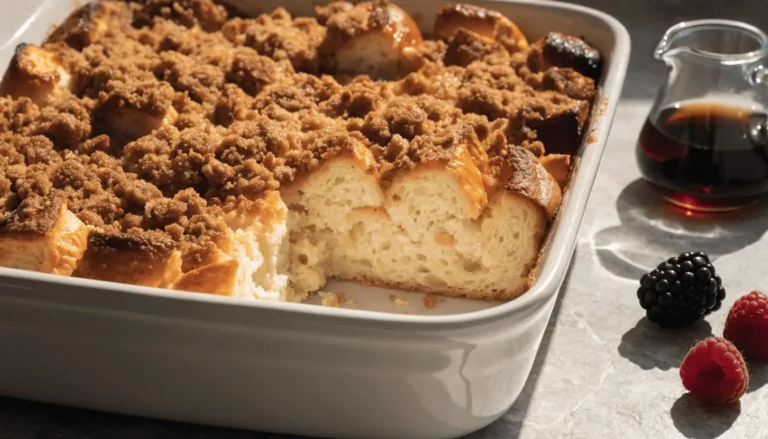
Challah French Toast Casserole
Rich challah bread is soaked in cinnamon-maple custard and baked beneath a buttery crumble for a soft, fluffy center and crisp golden top.
- Total Time: 1 hour 40 minutes minimum
- Yield: 10 servings
Ingredients
Casserole
- 1 large challah loaf (14–16 oz), cut into 1-inch cubes
- 8 large eggs
- 2 cups whole milk
- ½ cup heavy cream
- ⅓ cup packed light brown sugar
- 2 tablespoons pure maple syrup
- 2 teaspoons alcohol-free vanilla flavoring or vanilla powder
- 1½ teaspoons ground cinnamon
- ¼ teaspoon ground nutmeg
- ½ teaspoon salt
Cinnamon Crumble
- ½ cup all-purpose flour
- ⅓ cup packed light brown sugar
- 1 teaspoon ground cinnamon
- Pinch of salt
- 5 tablespoons cold unsalted butter, cubed
Instructions
- Grease a 9×13-inch baking dish and arrange the challah cubes evenly inside.
- Whisk eggs, milk, cream, brown sugar, maple syrup, vanilla, cinnamon, nutmeg, and salt.
- Pour the custard evenly over the challah and gently press the bread into the liquid.
- Rest for 30 minutes, or cover and refrigerate for 8–12 hours.
- Combine flour, brown sugar, cinnamon, salt, and cold butter until coarse crumbs form.
- Preheat oven to 350°F.
- Sprinkle the crumble over the casserole.
- Cover loosely with foil and bake for 25 minutes.
- Remove foil and bake another 20–25 minutes until golden and the center reaches 160°F.
- Rest 10 minutes before slicing and serving.
Notes
Estimated nutrition per serving: approximately 390 calories, 12 g protein, 45 g carbohydrates, 18 g fat.
- Prep Time: 20 minutes
- Rise Time: 30 minutes
- Cook Time: 45–50 minutes
- Category: Breakfast
- Method: Baking
- Cuisine: American
- Diet: Vegetarian